
Educational resource: This information supports, but does not replace, advice from your healthcare provider.
Information for Patients and Caregivers
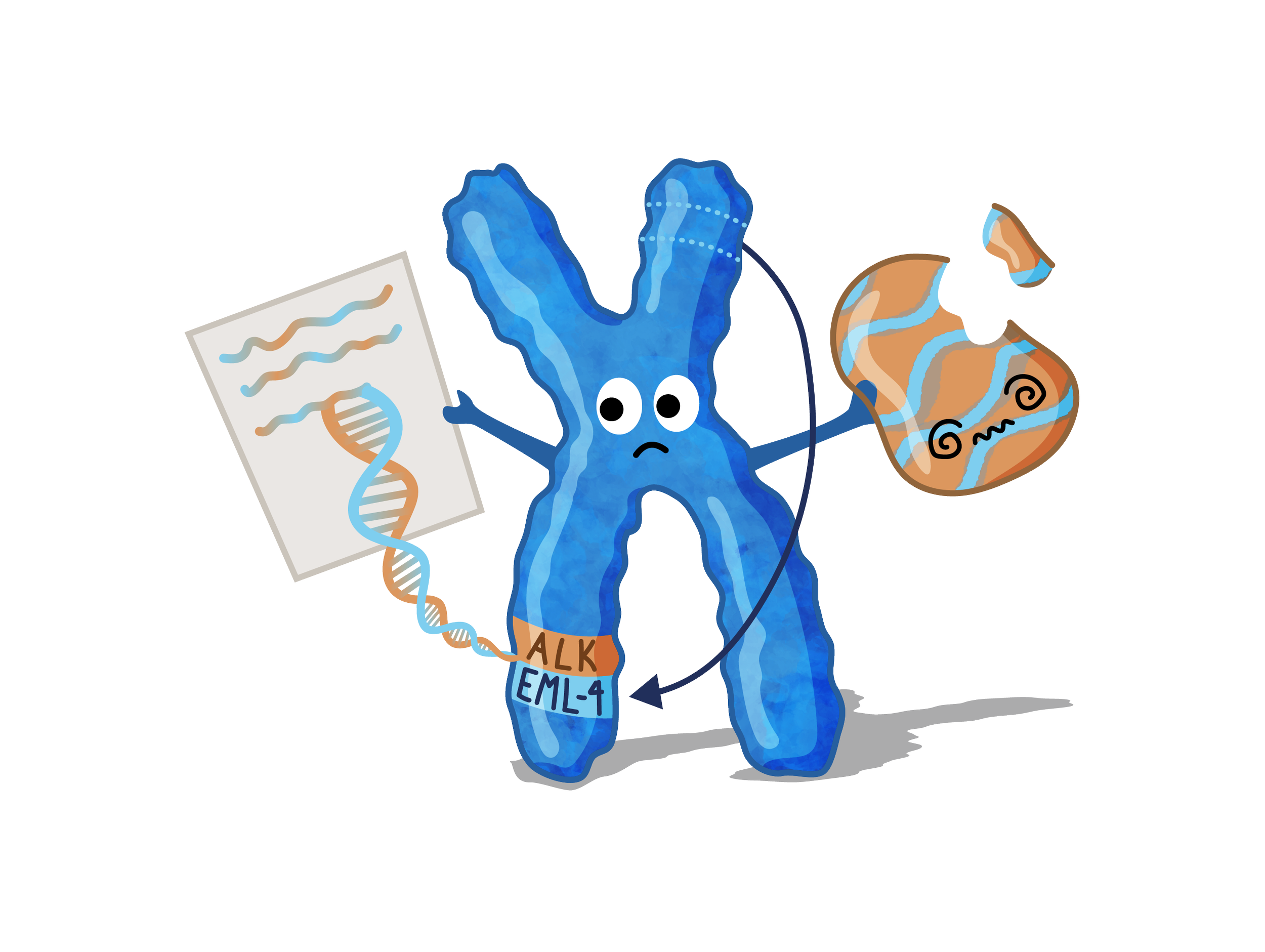
ALK+ Lung Cancer
ALK+ lung cancer has unique features that affect who it impacts, how it is treated, and what patients may experience over time.
Learn how it relates to other lung cancers, the stages of disease, how it is treated, and the outlook for those who are diagnosed.
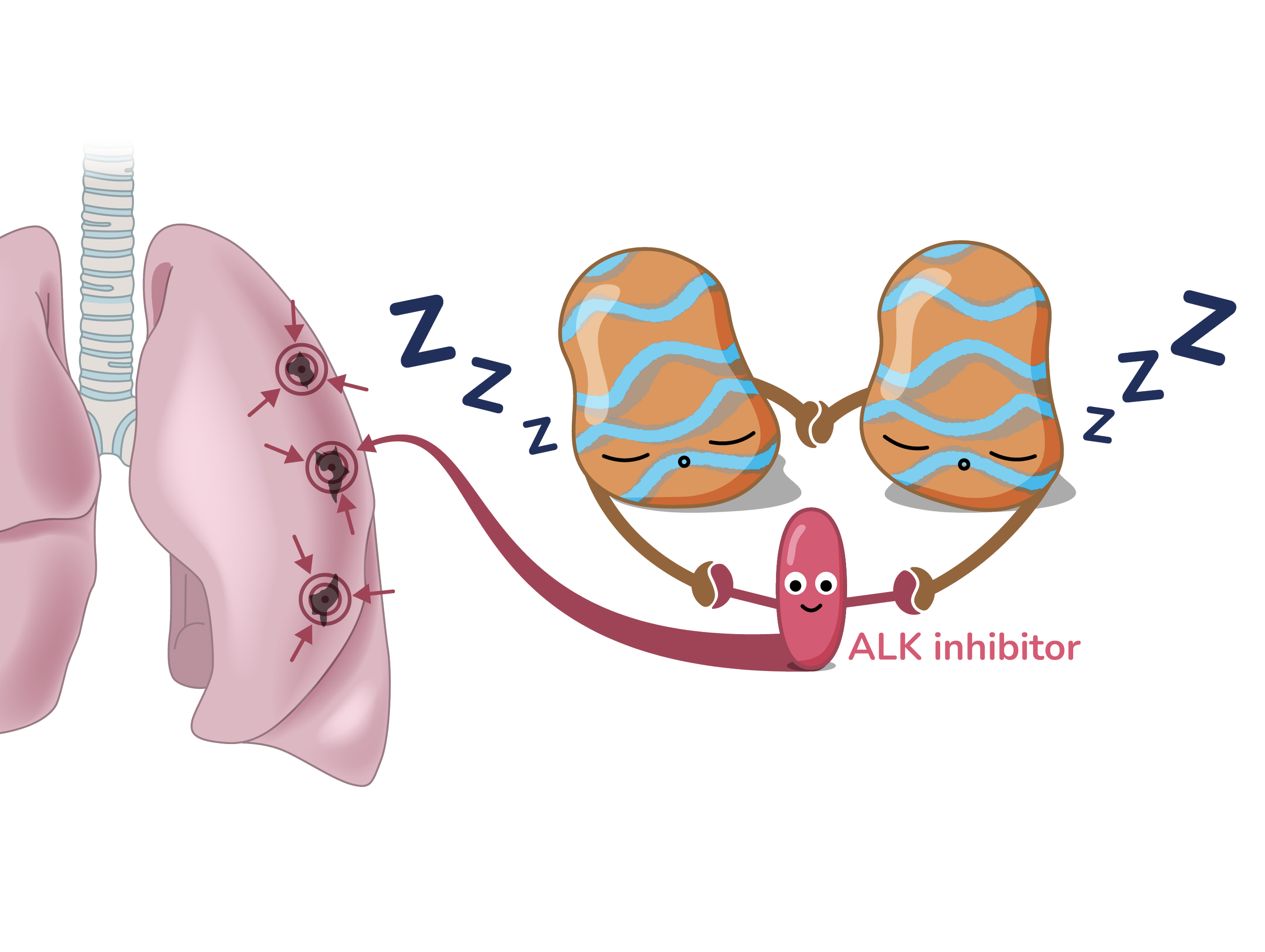
ALK Inhibitor Medication
ALK+ lung cancer is caused by a random change in the ALK gene. This creates a signal that causes cancer cells to grow.
ALK inhibitors are called a targeted therapy because they target ALK gene cancer signal.

ALK Inhibitor Side Effects
All medications can cause side effects. When you know what to expect, you can be prepared.
Learn what to expect with ALK inhibitor treatment, how to prevent and manage side effects, and when to contact your care team.