
Gastrointestinal (GI) Issues
nausea, vomiting, diarrhea, and constipation
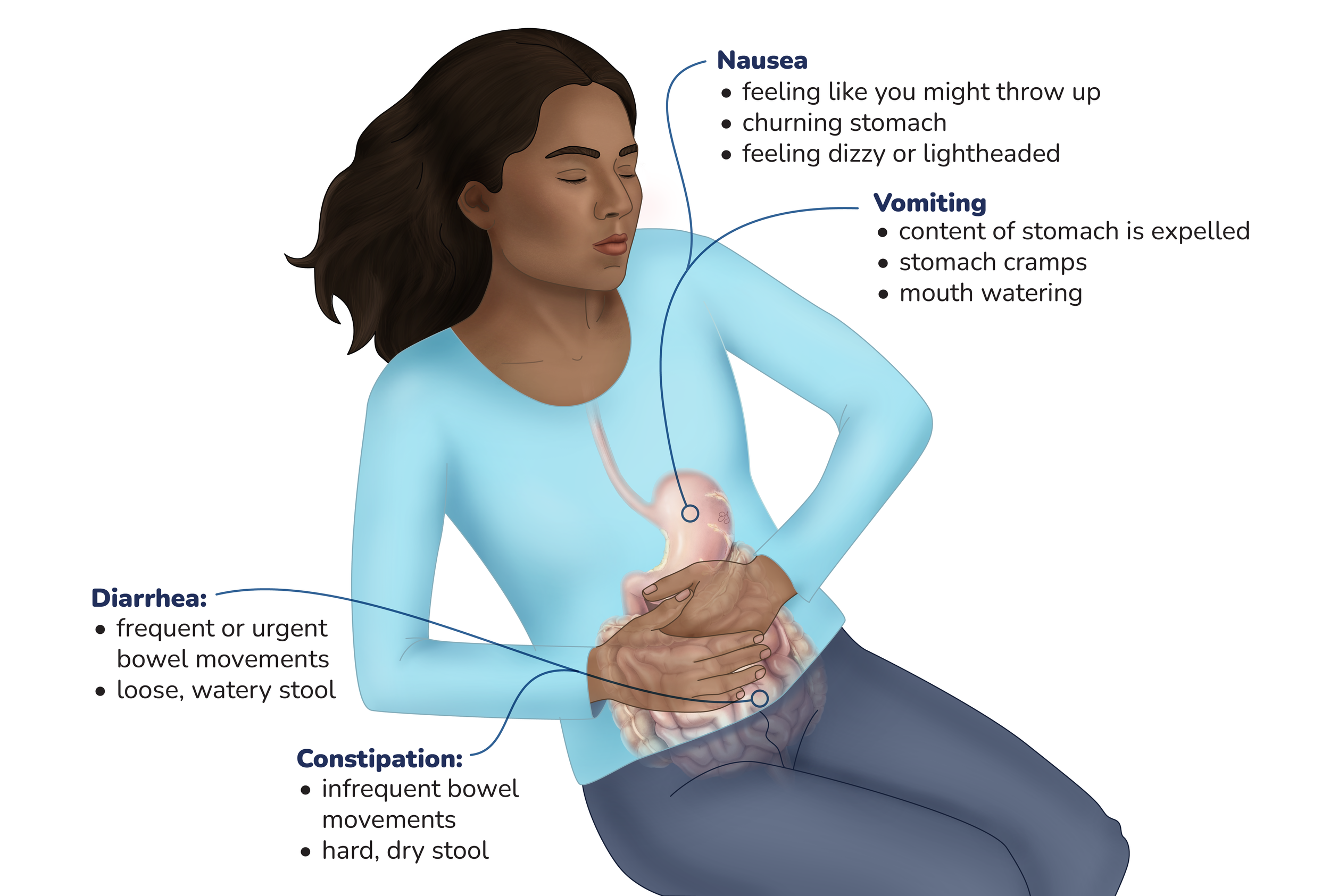
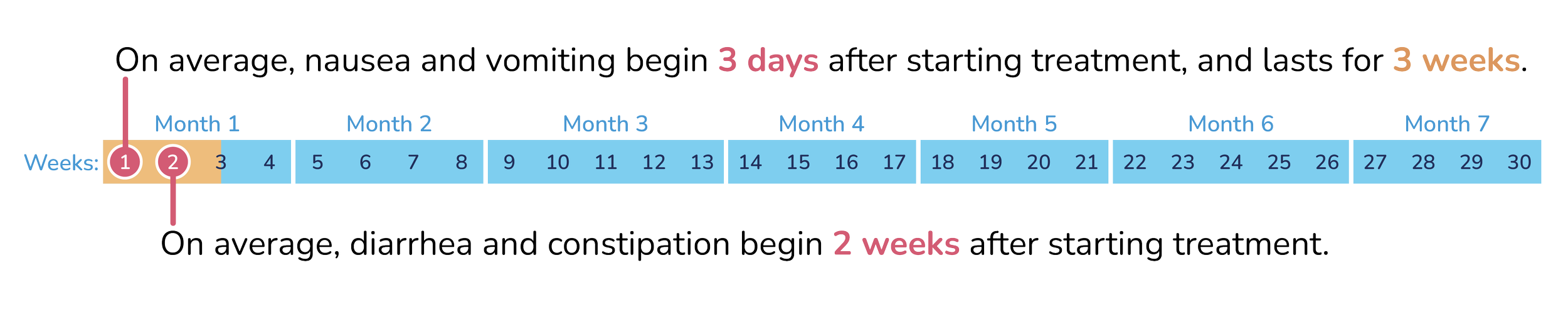
When do GI Issues start and how long do they last?

How serious are GI Issues?
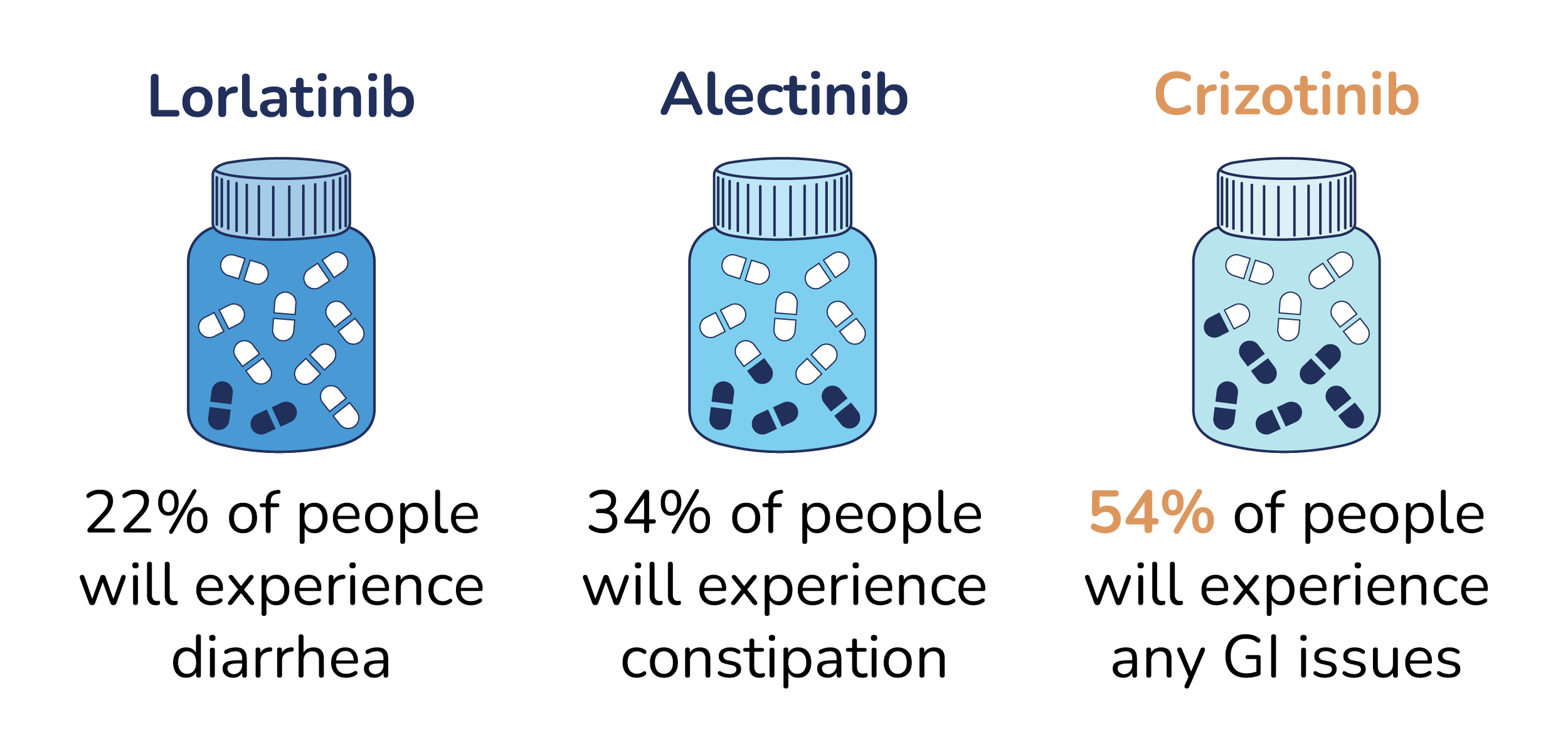
How likely is it that I will experience GI Issues?
Prevention Strategies
-
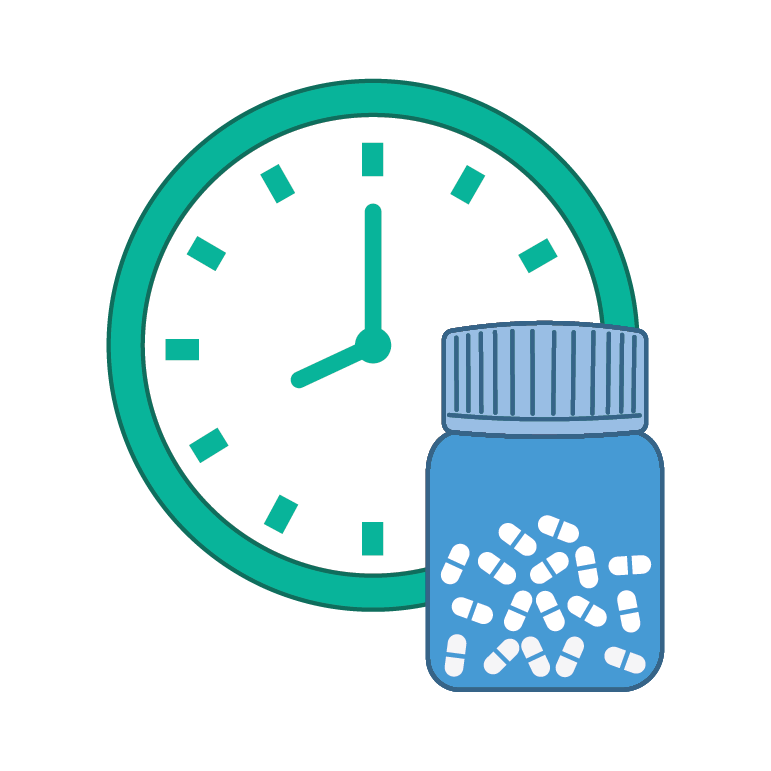
Alectinib should be taken with food.
Lorlatinib and crizotinib can be taken with or without food but stick with the same approach each time.
Why: taking medication consistently at the same time in the same way helps keep the effectiveness and absorption of the drug stable, preventing peaks or dips that worsen symptoms.

-
Alectinib should be taken with a substantial, high-fat meal (avoid low fat products).
Other ALKi's recommend small, frequent meals: 5-6 smaller meals. An empty stomach can make nausea worse.
Avoid substances that can cause GI upset such as alcohol, caffeine, spicy, sweet, fatty, or fried foods.
Drink lots of fluids: water, unsweetened juices, tea or flat ginger ale.
Eat 30g of fiber/day to prevent constipation: whole grains, fruit and vegetables, beans, and lentils.
Cook and freeze meals in advance to avoid upsetting smells if nausea and vomiting occur.
Why: these strategies can help remove potential triggers for GI upset.
-
For nausea and vomiting: prepare antiemetic medications (ondansetron, metoclopramide)
For diarrhea: prepare antidiarrheal medications (loperamide)
For constipation: prepare laxatives
Why: being prepared to use medications early when symptoms start can help prevent symptoms from worsening
Management Strategies

-
Nausea and vomiting: take small sips of clear fluids throughout the day such as water, unsweetened fruit juice, tea, or flat ginger ale.
Diarrhea: hydrate with oral rehydration such as Pedialyte or electrolytes like sports drinks.
Constipation: try prune juice and hot drinks.

-
Nausea and vomiting: try bland simple foods such as saltines and avoid unpleasant smells
Diarrhea: follow the BRAT diet (bananas, rice, apple sauce, toast). Avoid raw fruits and vegetables, and whole grains.
Constipation: increase fibre intake by eating fruits and vegetables
-
Nausea and vomiting: take prescription antiseptic medication.
Diarrhea: take antidiarrheals (loperamide)
Constipation: take laxatives. They must be taken every day to work
Two types of laxatives:
Stimulant laxatives: move stool through the bowel
Osmotic laxatives: help liquid stay in the bowel so stool does not become dry and hard to pass
Emergent Symptoms
If you are unsure, it is always safer to seek medical care.
Tell emergency staff you are on an ALK inhibitor for lung cancer.

Call a Healthcare Provider
Call your care team
Diarrhea for more than 2 days
Many loose poops in one day
No poop for 3 days
Belly pain or cramps
Nausea that makes it hard to eat or drink
Weight loss from stomach problems
New stomach problems after a dose change

Visit an Emergency Room
Call 911 or drive to your closest emergency room
You cannot keep fluids down for 24 hours
Throwing up many times in one day
Throwing up blood or dark brown vomit
Black poop or blood in your poop
Very little or no pee
Dizziness, fainting, confusion, or extreme weakness
Fever 100.4°F (38°C) or higher
Sudden or very bad belly pain
Hard, swollen, painful belly
Cannot pass poop or gas and you have pain and bloating