
Alectinib | Alecensaro
Jump to a section
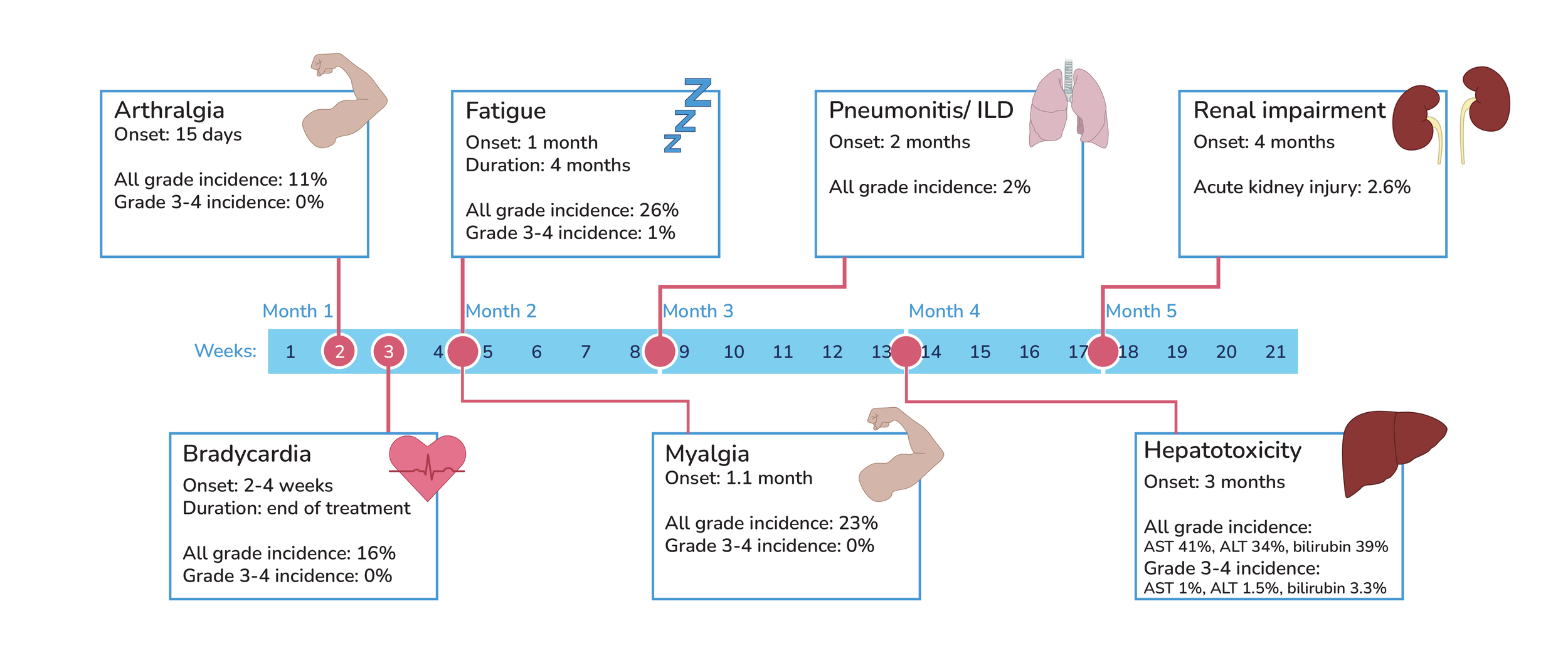
Timeline of Alectinib side effects:
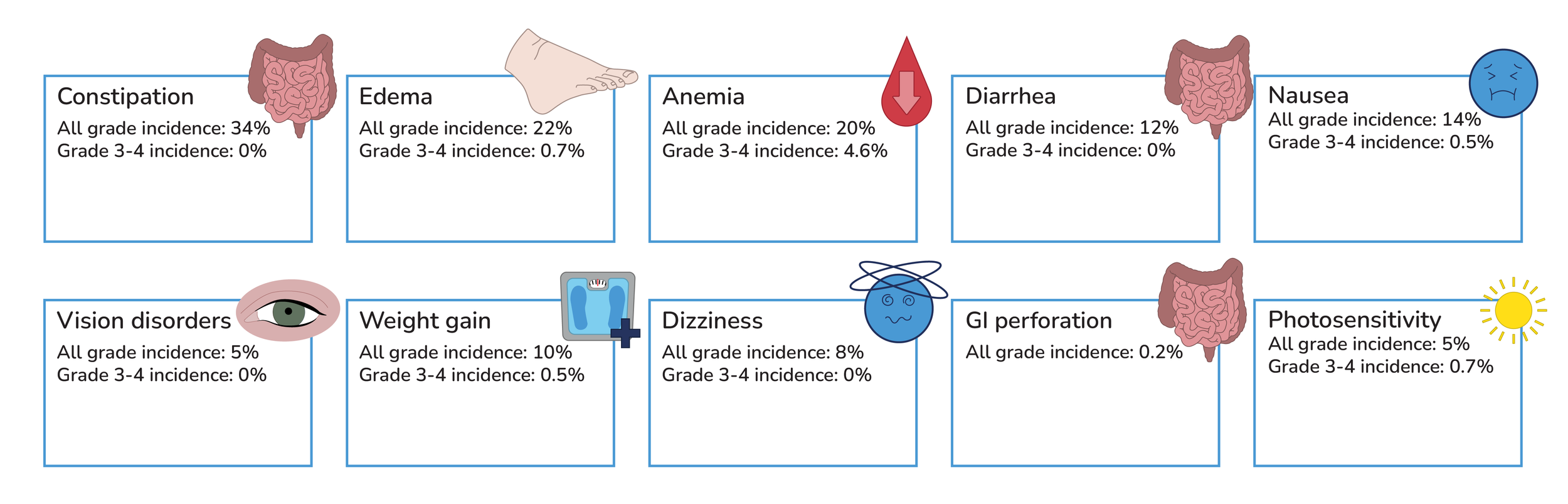
Other Alectinib side effects:
Tests to perform before starting treatment:

-
Liver function test: ALT, AST, and total bilirubin.
Renal function test: creatine levels.
CPK test.
-
Effect on fertility is unknown.
May cause fetal harm- both men and women must use highly effective contraceptive methods during treatment and for 3 months following.
Avoid pregnancy and breast feeding while taking alectinib.

-
Monitor heart rate and blood pressure at the start of treatment. Exercise caution for low heart rate at baseline- less than 60bpm.
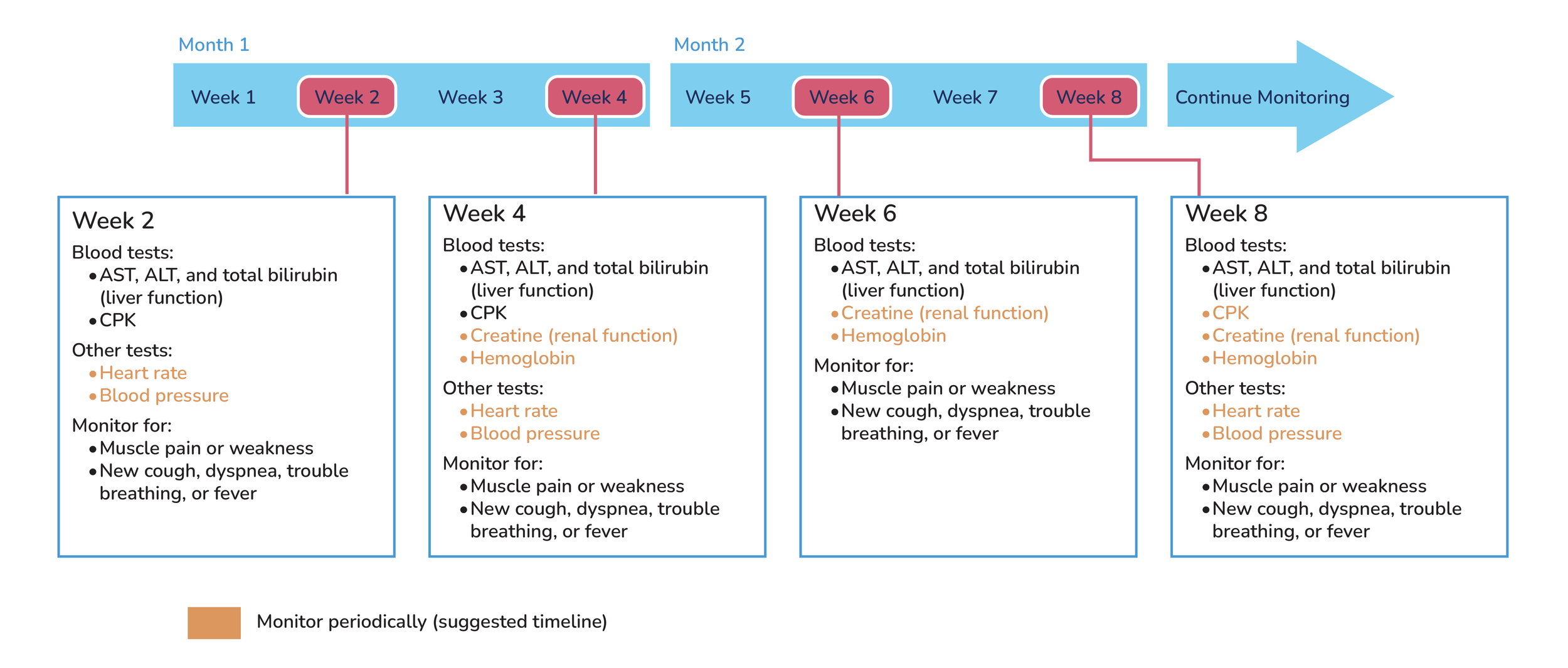
Tests to perform during treatment:
General dose guidelines:
-
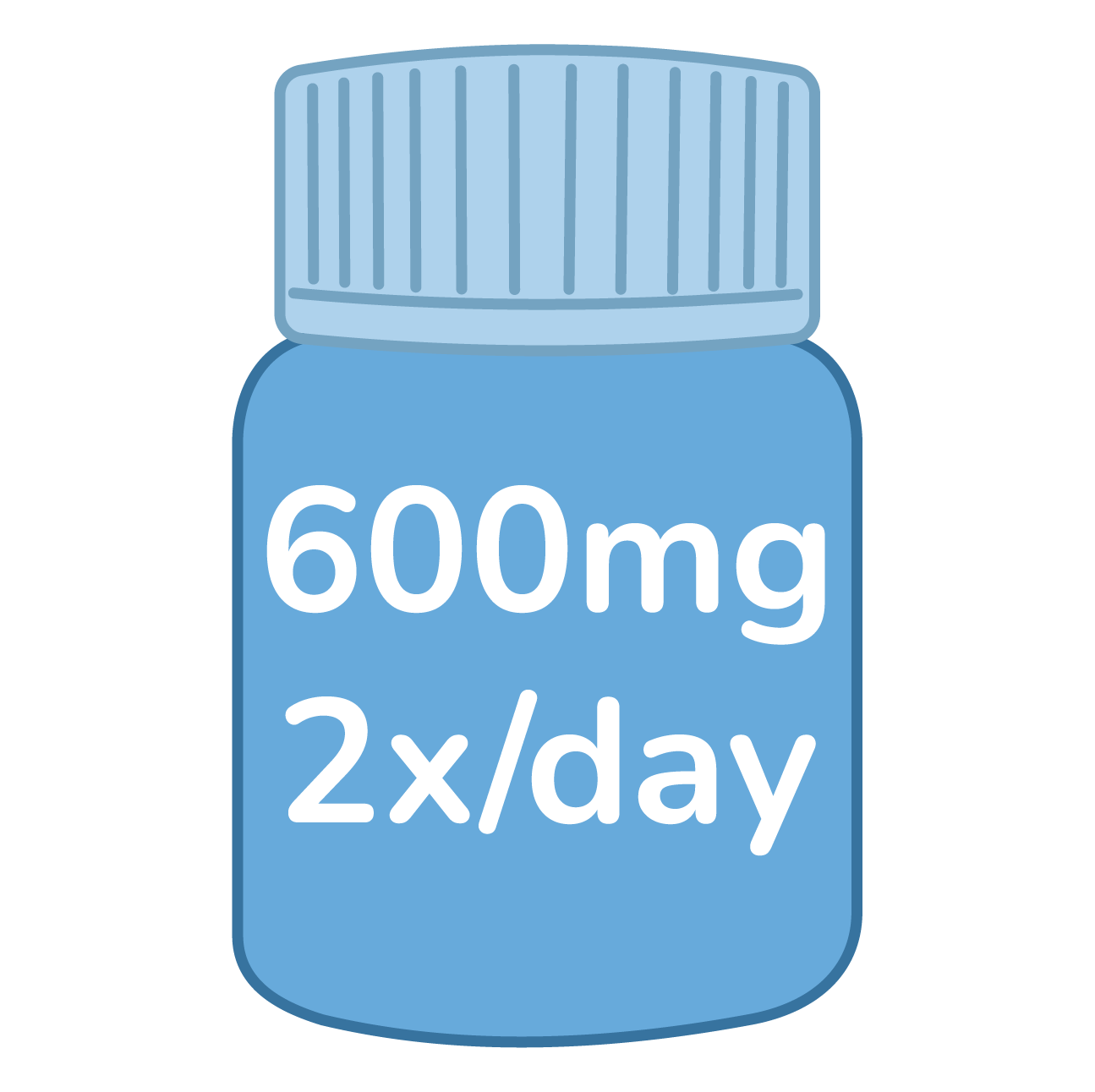
Recommended starting dose: 600mg orally 2x/day.
Taken with food (avoid grapefruit, grapefruit juice, products containing grapefruit extract, star fruit, pomegranate, Seville oranges, and other similar fruits)
Medication should be taken at the same time each day.
Tablets should be swallowed whole, do not use if compromised (broken, cracked, etc.).
-
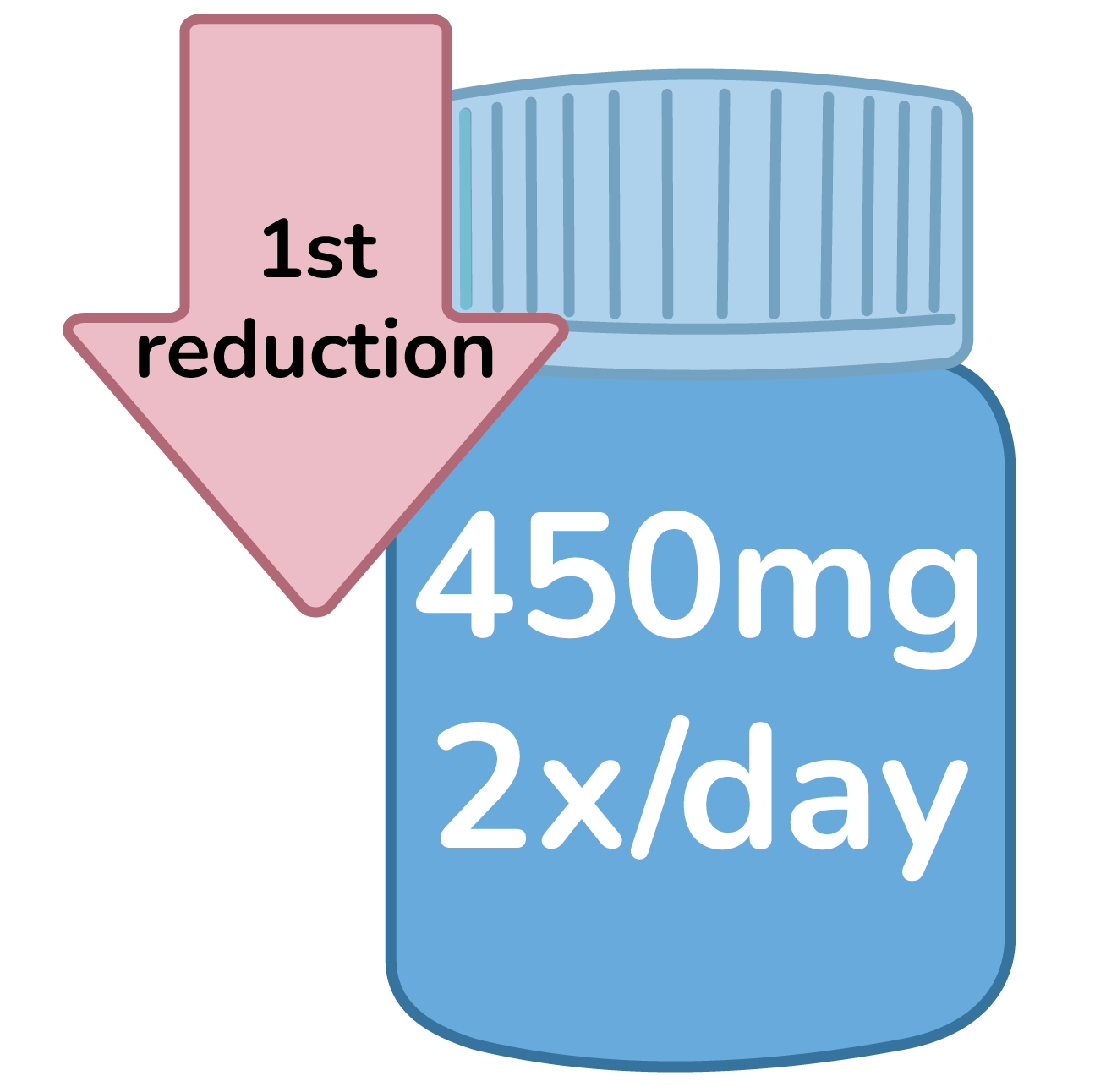
First reduction: 450mg 2x/day
Confirm condition does not fall under specific dose reductions.
-
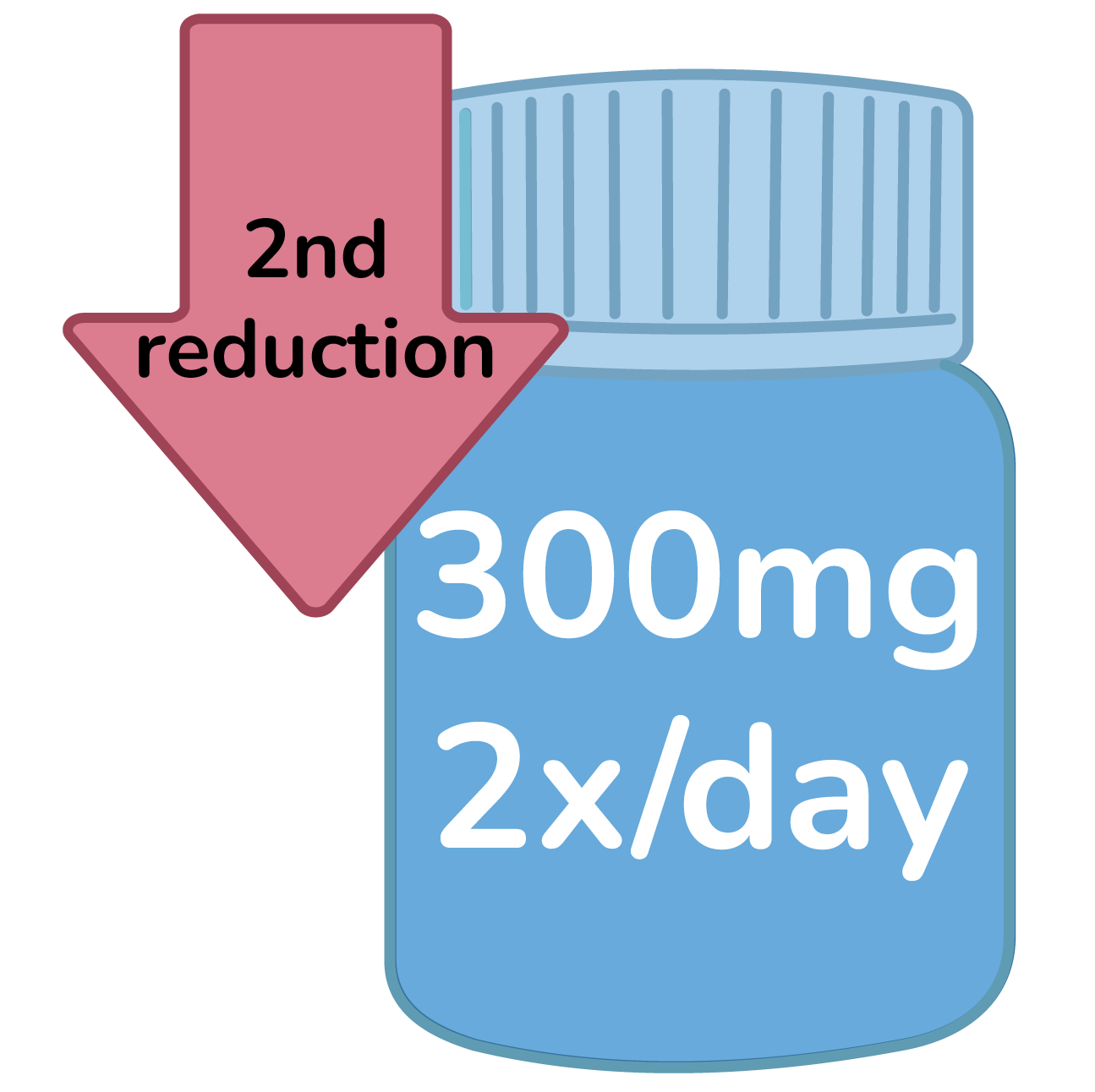
Second reduction: 300mg 2x/day
Confirm condition does not fall under specific dose reductions.

-
Discontinue if patient cannot tolerate 300mg 2x/day.
Specific dose guidelines:
-
Pause treatment and if no other causes can be identified, permanently discontinue.
-
For mild-moderate impairment: no dose adjustment required.
For significant ALT/AST/bilirubin elevations: reduce dose to 450mg twice daily.
For severe patterns: permanently discontinue.
-
For mild-moderate impairment: no dose adjustment required.
For grade 3: withhold until recovery then resume at reduced dose.
For grade 4: permanently discontinue.

-
Permanently discontinue.

-
For grade 2 or 3: temporarily withhold until recovery to grade 1.
If concomitant medication is adjusted, resume at previous dose.
If no medication adjustment, resume at reduced dose.
For grade 4: permanently discontinue.
If concomitant medication is identified, resume at reduced dose upon recovery to grade 1.

-
Over 5x ULN: temporarily withhold until recovery to baseline, then resume same dose.
Over 10x ULN or second time elevation: withhold until recovery to baseline, then reduce dose.

-
Withhold until resolution then resume at reduced dose or permanently discontinue.
Additional resources:
Know what to expect regarding alectinib side effects:
Overall, alectinib is well tolerated, and most side effects can be managed with dose modifications when necessary. Myalgia and peripheral edema are some of the more debilitating side effects for patients, while bradycardia and peripheral edema tend to be more difficult to manage for physicians.
Alectinib has strong CNS/brain metastases activity
The risk of CNS progression is reduced with alectinib. 12% of patients taking alectinib had an event of CNS progression compared with 45% taking crizotinib.
Lorlatinib has a 2.8% cumulative incidence risk of CNS disease progression at 12 months, compared with alectinib with 9.4%.