
ALK+ Lung Cancer
There are two types of lung cancer:
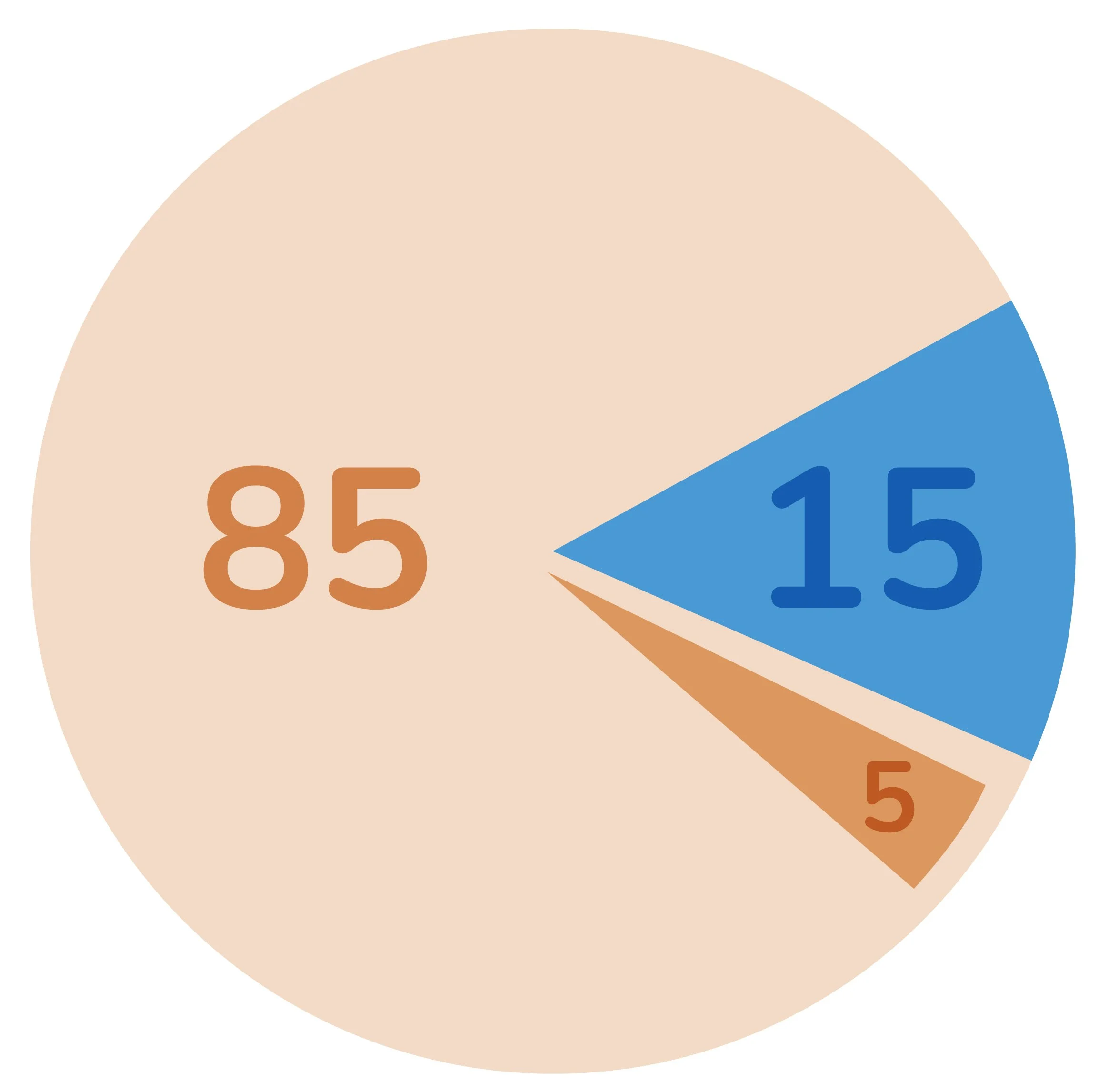
Non small cell lung cancer makes up 85% of all lung cancer cases
5% of these cases are ALK+
Small cell lung cancer makes up 15% of all lung cancer cases
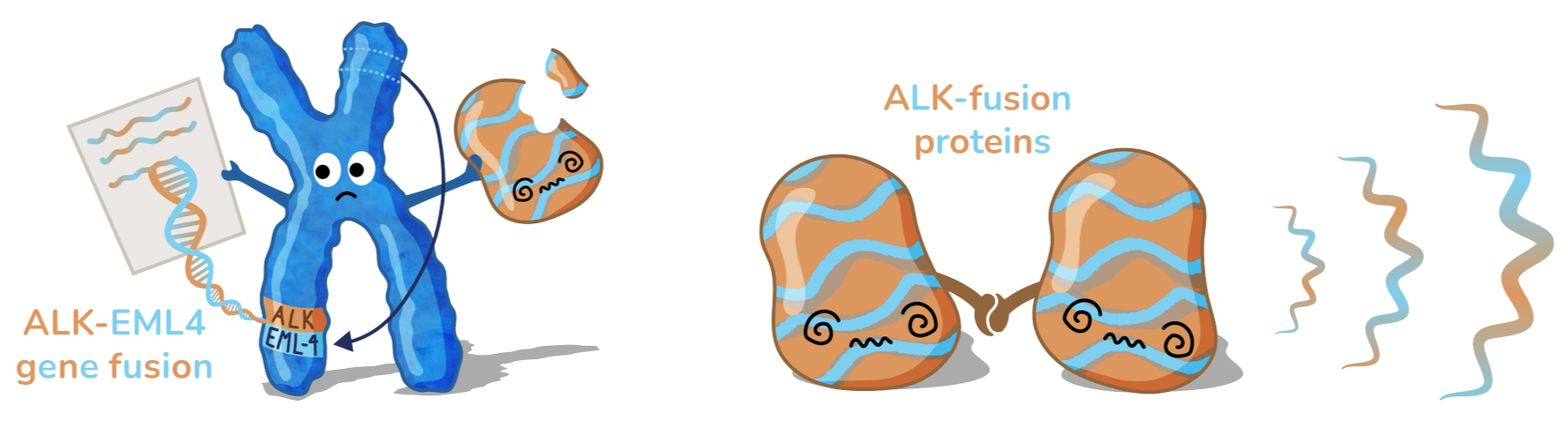
ALK+ lung cancer is caused by a genetic mutation:
Everyone has the ALK gene, which contains instructions for making the ALK protein. A random DNA mutation can cause the ALK gene to fuse with another gene, most often EML4. This fusion turns the ALK gene on and produces abnormal ALK-fusion proteins. Unlike normal ALK proteins, these fusion proteins send signals that turn cells cancerous.
Why did I get ALK+ lung cancer:
ALK+ lung cancer is caused by a random genetic change. It is not because of something you did or something that was passed down to you by a family member. You also cannot pass it down to your children.

50% of ALK+ cancer patients are diagnosed before the age of 50, some in their teens or 20's

Unlike small cell lung cancer, ALK+ lung cancer also affects those who have never smoked

ALK+ lung cancer tends to be more common in people of East Asian ethnicity, and in women.
Treatment options:

-
ALK inhibitors are oral medicines (pills you swallow) that block the abnormal ALK-fusion proteins from sending signals that turn cells cancerous. Most ALK+ lung cancers respond best to this treatment.
Types of ALK Inhibitors:
Lorlatinib (3rd generation)- particularly effective at treating brain metastases
Alectinib (2nd generation)
Brigatinib (2nd generation)
Crizotinib (1st generation)
At some point during treatment, the cancer may start to grow again: this may require surgery, radiation, chemotherapy, or a change to another ALK inhibitor.

-
Chemotherapy utilizes drugs that kill fast-growing cells, including cancer cells. Because chemotherapy affects more than just the cancer cells, there are more side effects including hair loss, nausea, fatigue, and low blood counts.
-
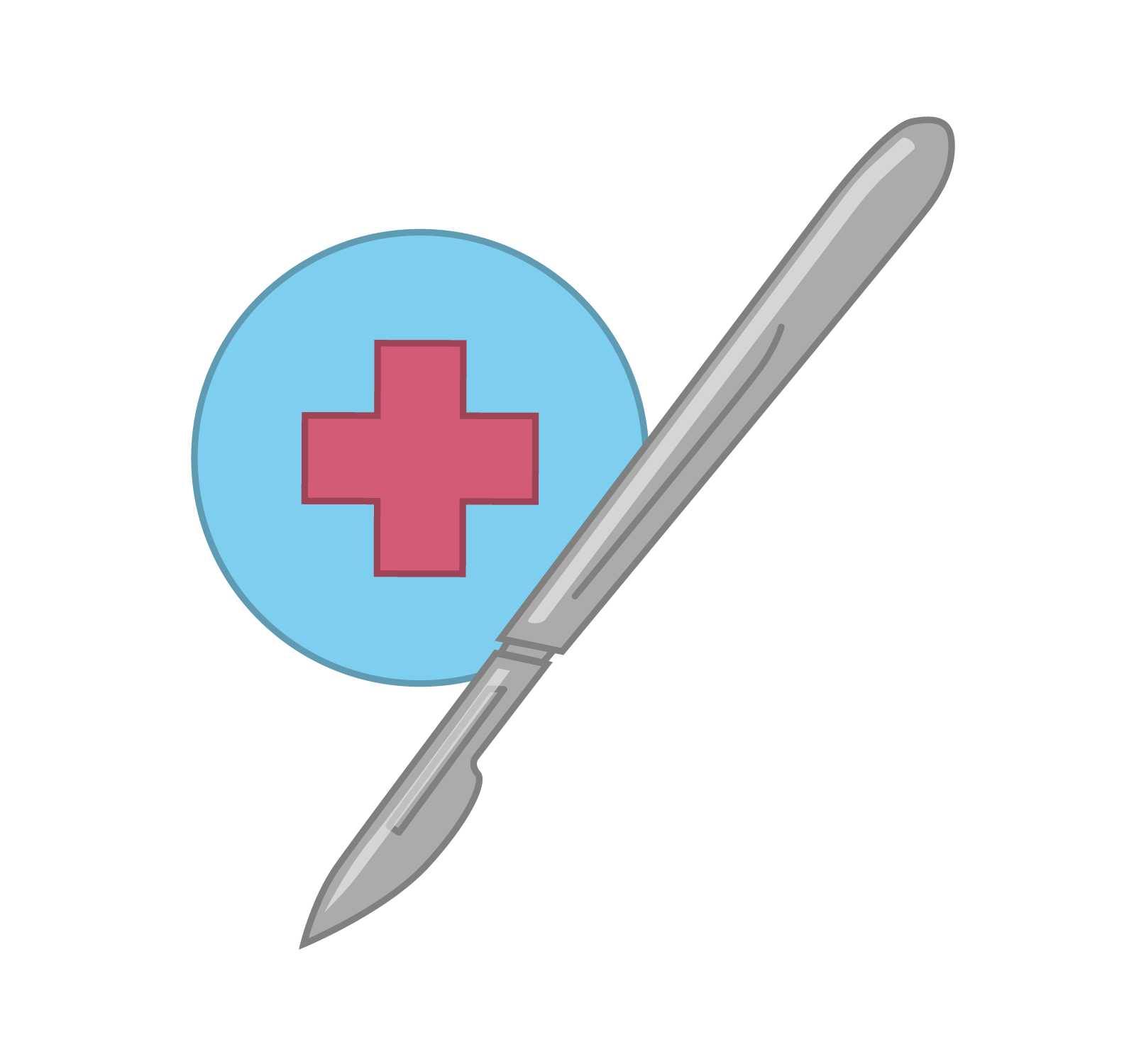
In some cases, surgery can be used to remove lung tumors and nearby lymph nodes. This is most useful in early stages when the cancer hasn’t spread. Surgery is often used in combination with other treatments.
-
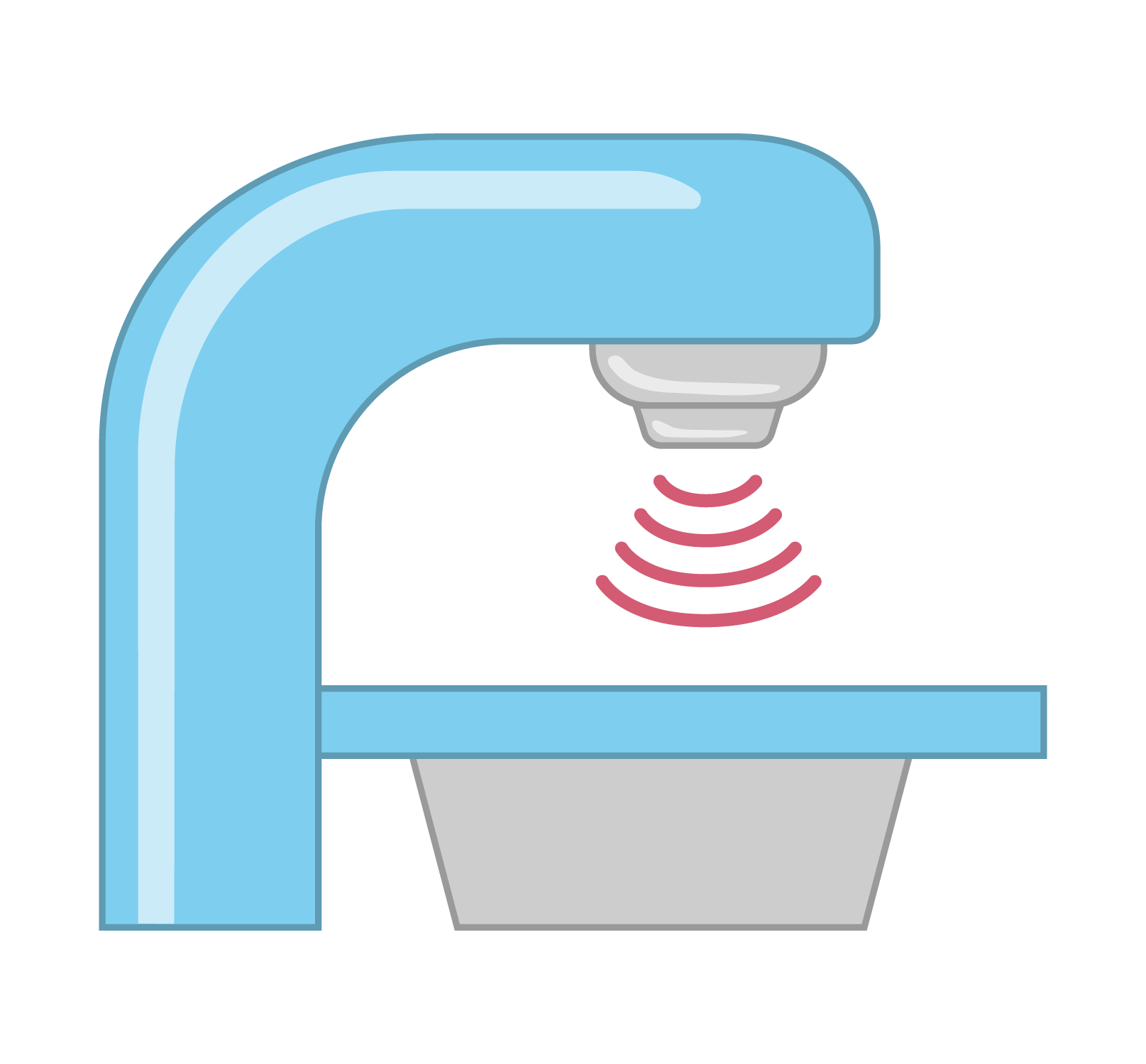
Uses high energy beams to destroy cancer cells in specific areas. This type of treatment is effective for specific areas, such as brain metastases, but does not treat cancer throughout the whole body.
Lung anatomy:
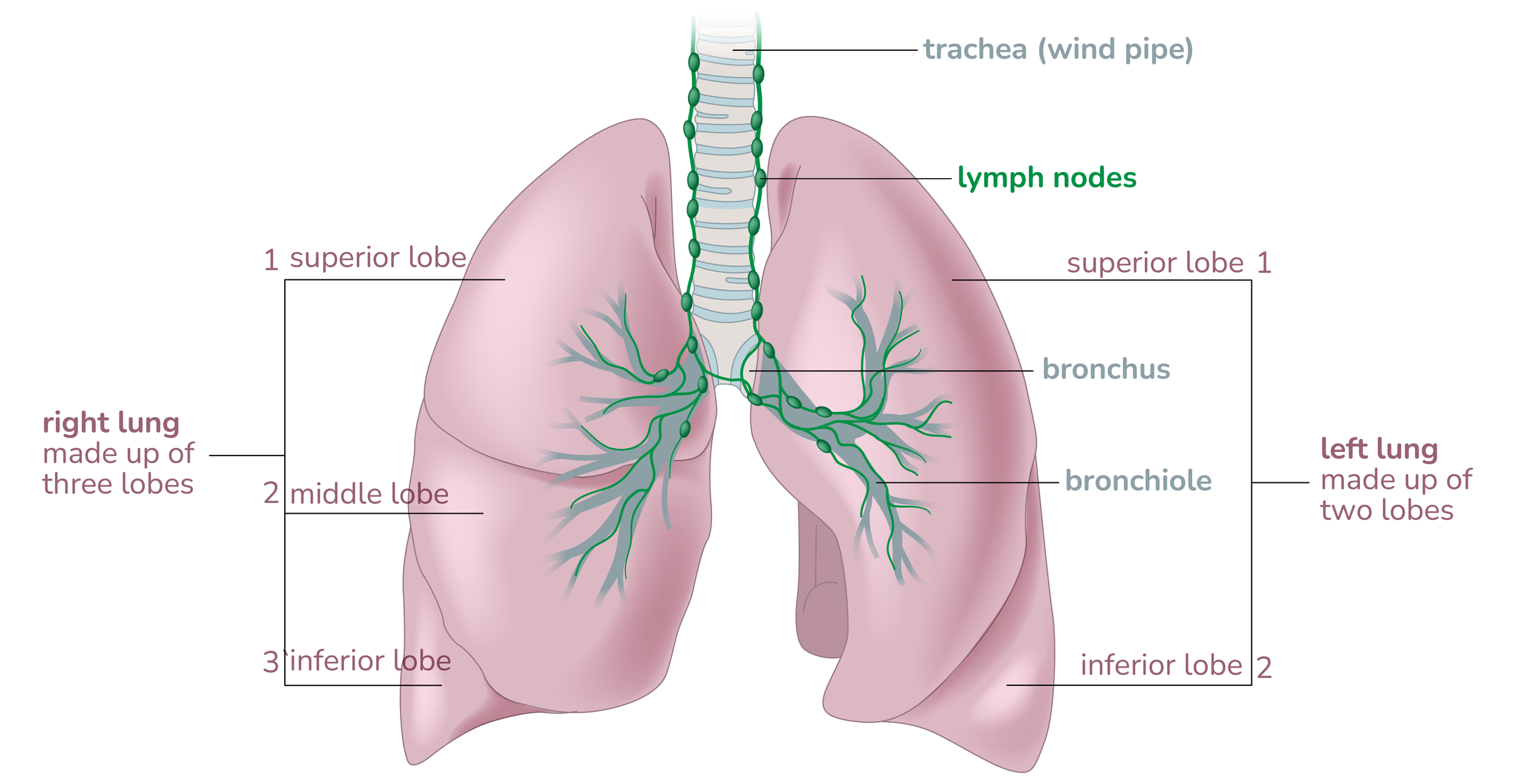
Stages of Lung Cancer
-
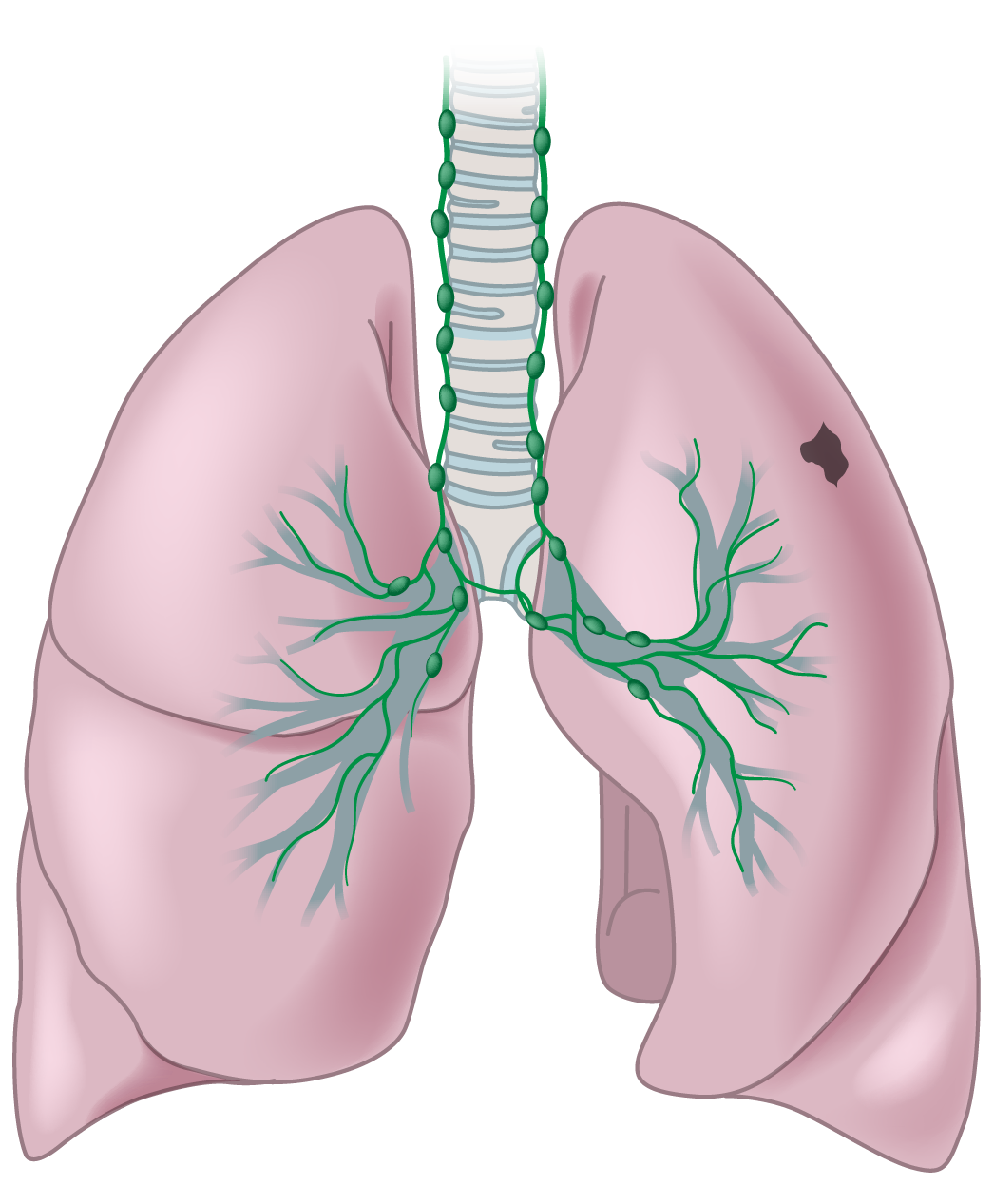
![Diagram of human lungs showing bronchi and a black spot indicating stage 1 cancer.]()
Stage 1
EARLY STAGE
The tumor is 4cm or smaller.
-
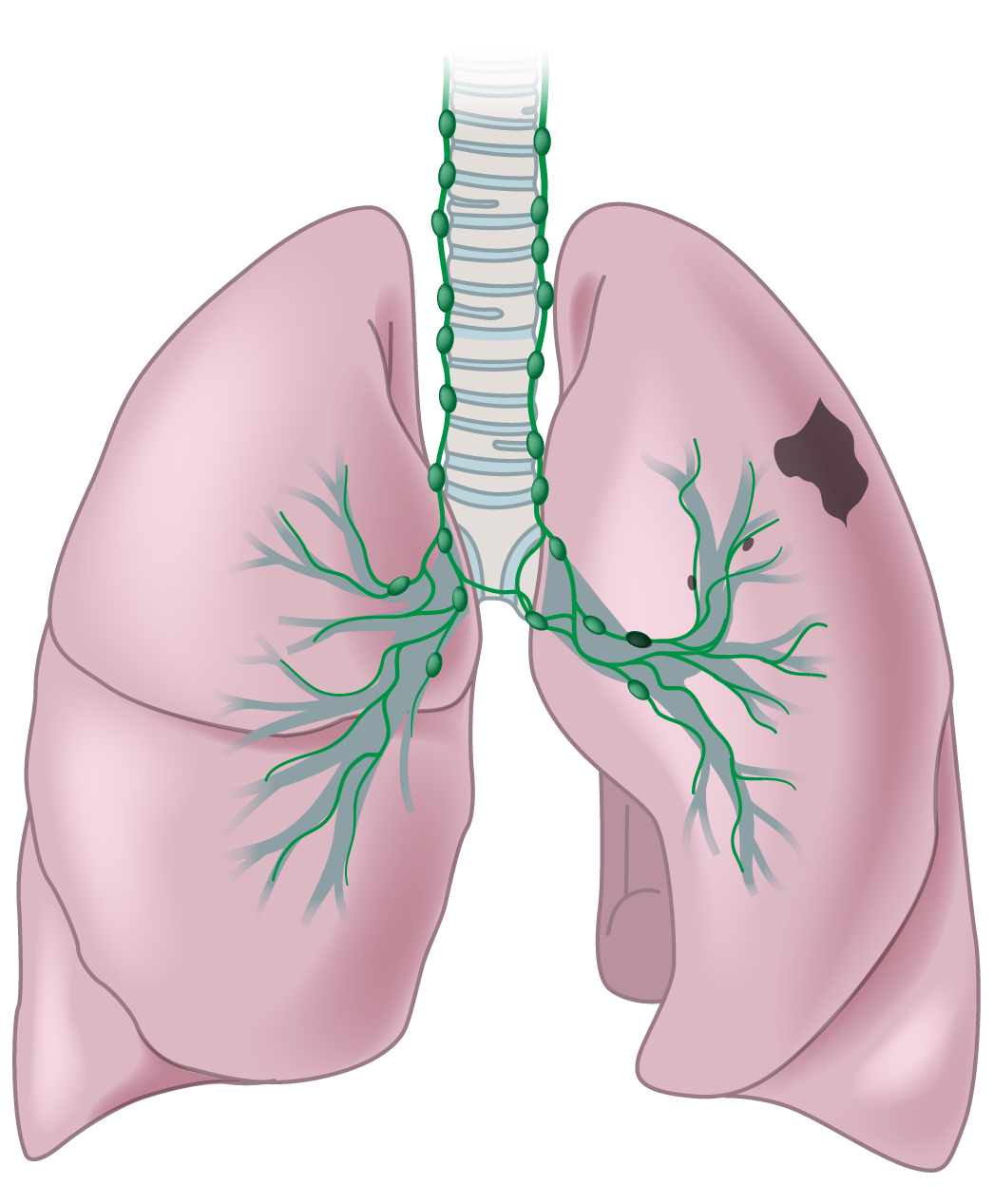
![Illustration of a human lungs with bronchial tubes and lymph nodes, showing a dark spot on the right lung indicating stage 2 cancer]()
Stage 2
EARLY STAGE
The tumor is 3-7 cm but has not spread to other organs.
-
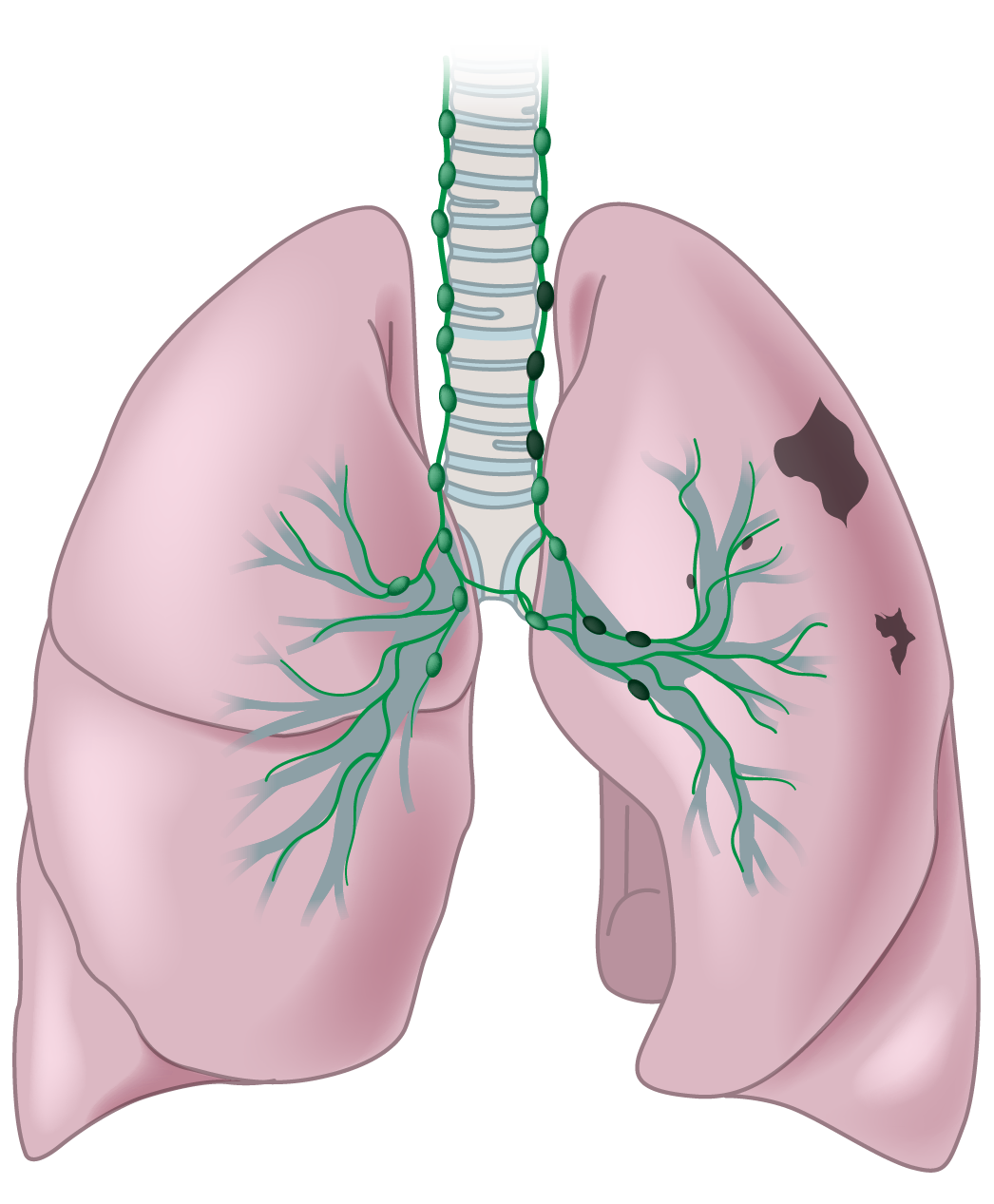
![Illustration of human lungs showing dark spots indicating stage 3 lung cancer]()
Stage 3
LOCALLY ADVANCED
The tumor has grown into tissues and lymph nodes in the chest.
-
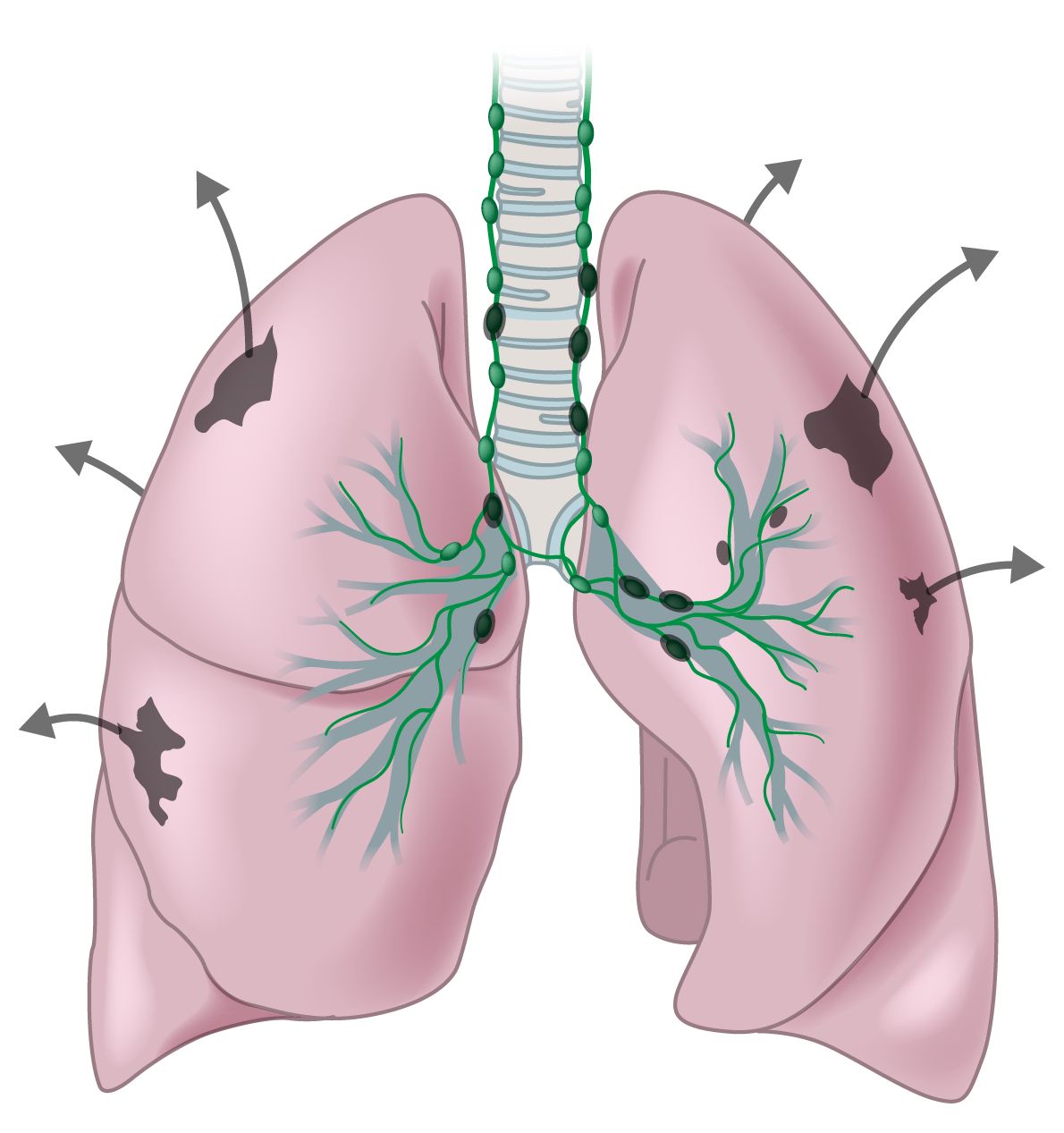
![Medical illustration of human lungs showing dark spots indicating stage 4 lung cancer. Dark spots have arrows indicating cancer has spread outside the lungs]()
Stage 4
METASTATIC
The cancer has spread to one or more organs outside the chest.

Outlook for people living with ALK+ lung cancer:
SURVIVING LONGER
ALK+ lung cancer is often diagnosed at later stages when it cannot be cured. However, targeted therapies such as ALK inhibitors are highly effective at controlling the disease. Current data show a median survival of seven years after diagnosis, meaning many people live even longer.
LEARNING MORE
In recent years, significant advances have been made in the treatment of ALK+ lung cancer. Ongoing research continues to improve therapies and deepen understanding of the disease. As a result, the outlook for people living with ALK+ lung cancer is expected to keep improving.