
ALK Inhibitor Medication
ALK is a protein that is important while we are in the womb

Everyone has the ALK gene. It has instructions to make the ALK protein. The gene is normally active before birth, allowing the ALK protein to be made.

The protein is briefly switched on by a molecule called a ligand- like a quick high-five. This temporary activation helps the gut and nervous system develop.
Usually the ALK gene is turned off after we are born

People who have ALK+ lung cancer have the ALK gene turned back on by a random mutation

A random DNA mutation can cause the ALK gene to fuse with another gene, most often EML4. This fusion turns the ALK gene back on and produces abnormal ALK-fusion proteins.
ALK fusion proteins cause cancerous cells to grow

Unlike normal ALK proteins, these fusion proteins do not need a ligand. Instead, they permanently activate each other- more like holding hands than a high-five.
This constant activation sends signals that turn cells cancerous.
ALK inhibitor medications stop the signal from ALK-fusion proteins
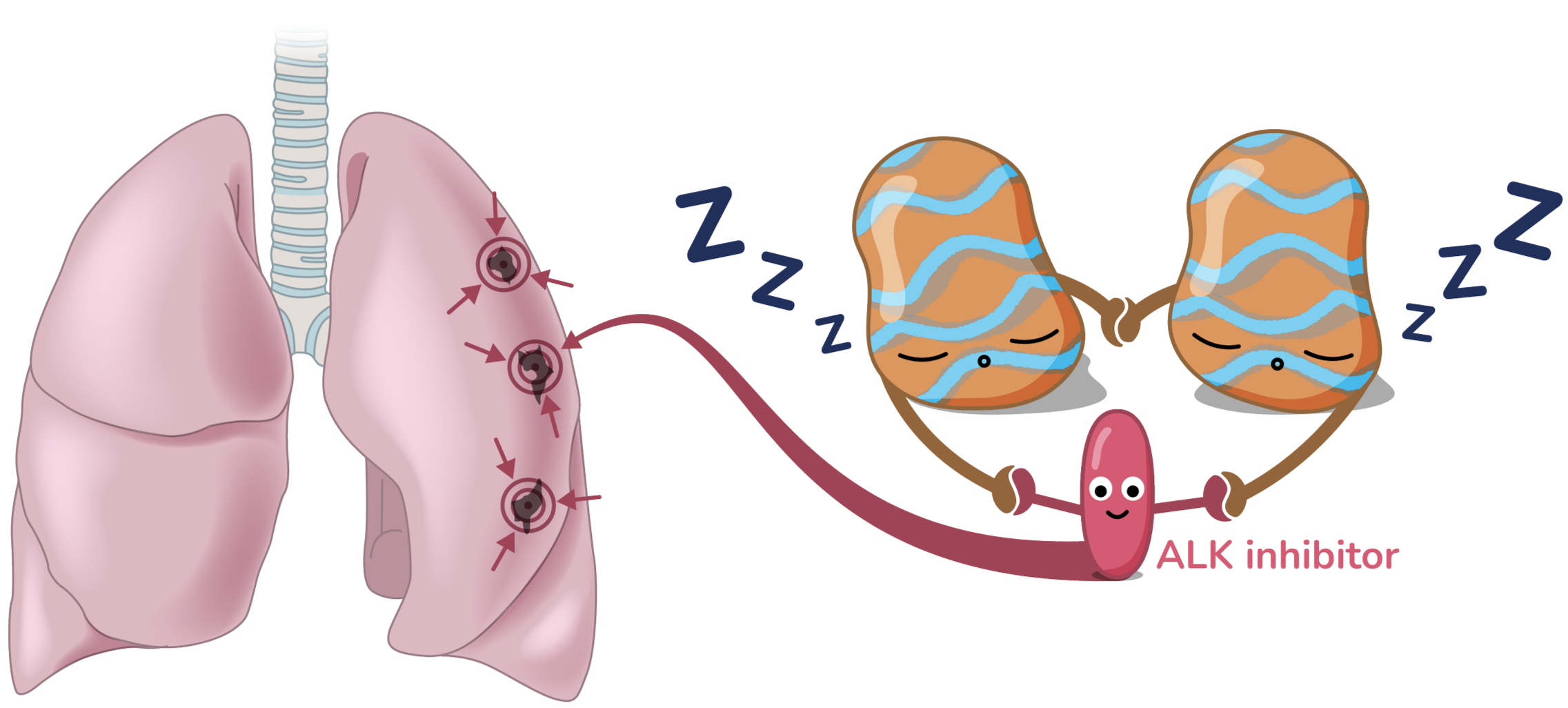
ALK inhibitors are targeted medications that block these cancer causing signals from the ALK-fusion proteins. By interrupting the signal, they slow cancer growth and in some cases shrink tumors.
Lorlatinib (Lorbrena) ALK Inhibitor
Lorlatinib is a third-generation ALK inhibitor. It was developed to overcome some of the challenges seen with earlier ALK inhibitors including targeting cancer that has spread to the brain.
How Well Lorlatinib Works:

Lorlatinib has been found to have long term benefits. It can stop the growth of new cancer and prevent existing cancer from spreading to new locations for up to 7 years for most people.

The outlook for those who take Lorlatinib is promising. After 2 years of treatment, people who have had no cancer growth or spread have a 79% chance that this will continue for the next 5 years.

Lorlatinib is very good at preventing lung cancer from spreading to the brain.

Manageable Side Effects
Lorlatinib often causes side effects but you and your healthcare team can work together to actively manage them.
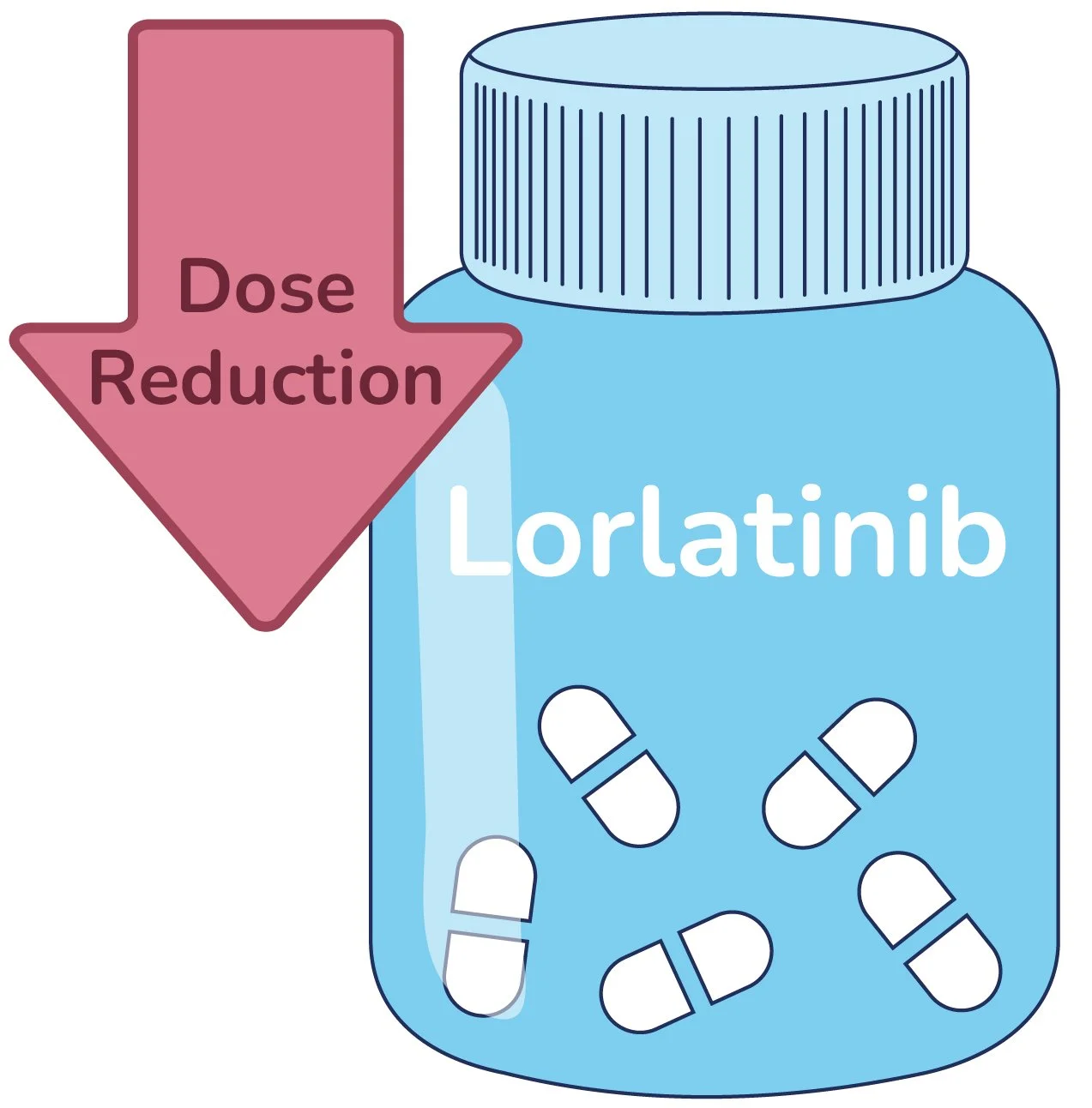
Your healthcare team may reduce your dose of lorlatinib to decrease the side effects. This can be done without increasing the risk of cancer growing or spreading.
Most Common Side Effects
The most common side effects caused by lorlatinib include increased cholesterol, high blood pressure, and weight gain. Some people might experience mild changes to the nervous system or mood.
Be sure to speak with your healthcare team about any side effects you are experiencing or if you have any concerns



Outlook On Lorlatinib:
MAJOR BREAKTHROUGHS
By keeping cancer under control, protecting the brain, and having manageable side effects, lorlatinib provides a major improvement in treating ALK-positive lung cancer.
SETTING NEW STANDARDS
These 7-year results show how well targeted treatments like lorlatinib can control cancer over the long term.