
Hyperlipidemia
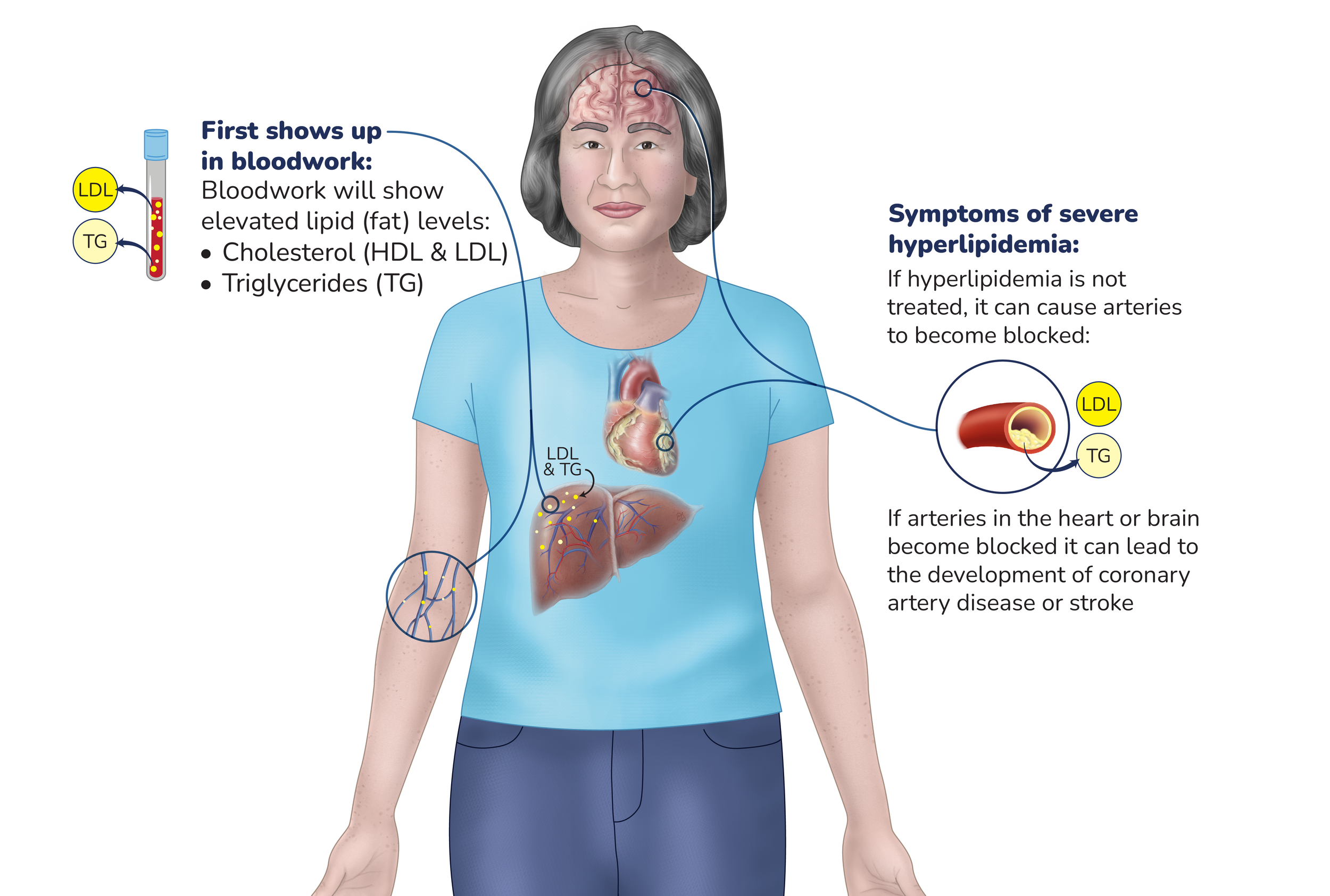
high cholesterol or triglycerides (fat) levels in blood
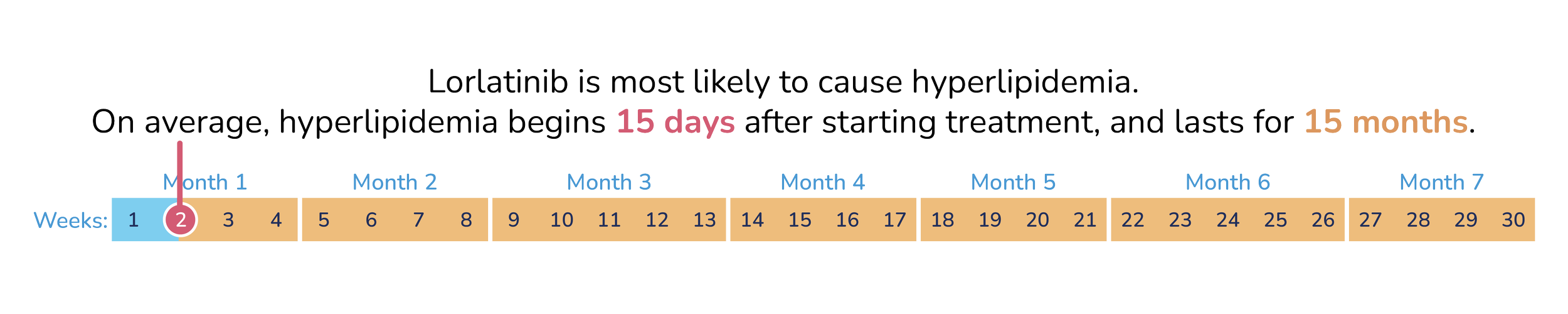
When does hyperlipidemia start and how long does it last?
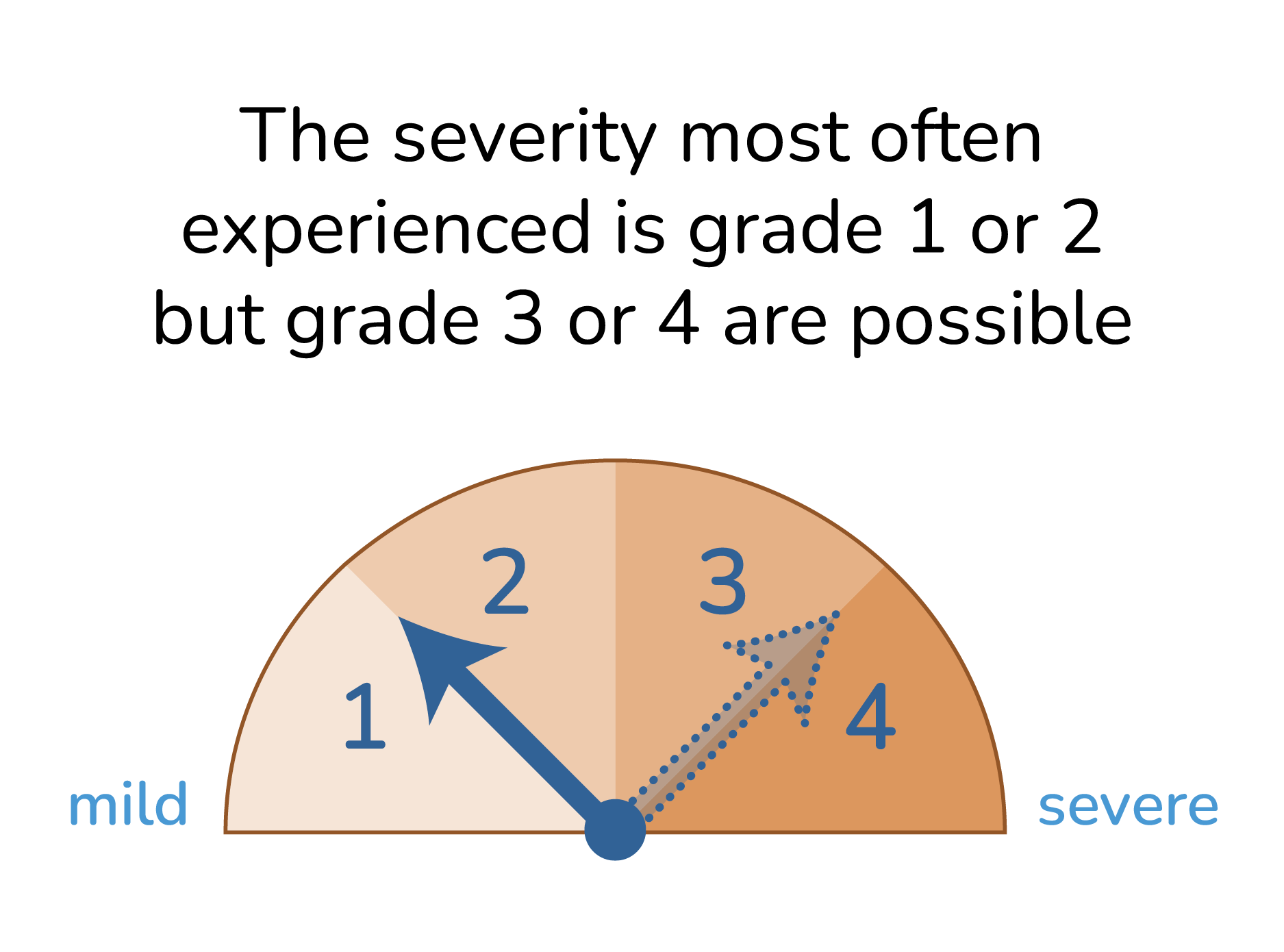
How serious is hyperlipidemia?
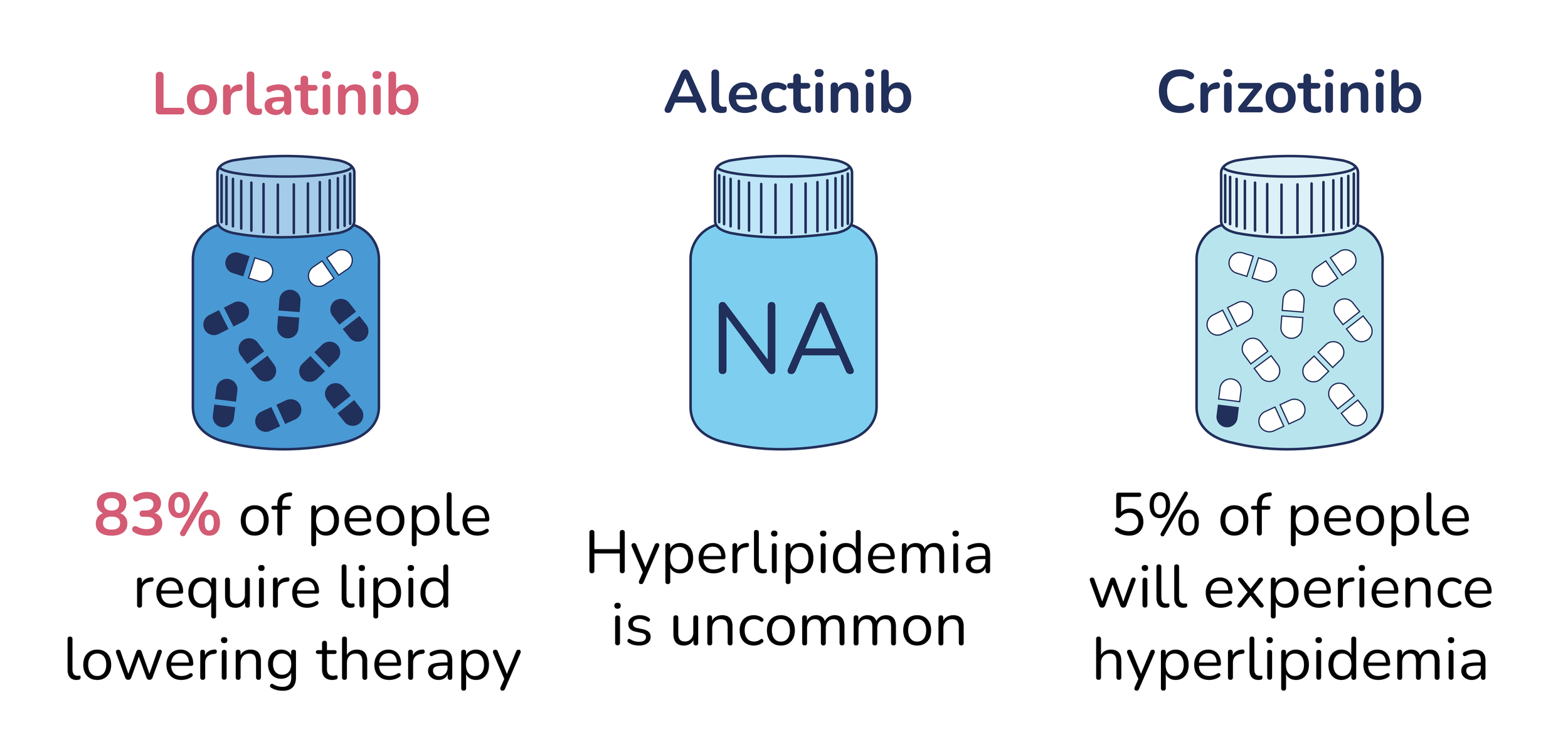
How likely is it that I will experience hyperlipidemia?
Prevention Strategies

-
Your healthcare team will monitor blood lipid levels including serum cholesterol and triglyceride.
Blood lipid levels should be checked:
Before starting lorlatinib
At week 2, week 4, and week 8
Periodically after week 8
Why: Detecting lipid increases early allow for early intervention and decreases risk for other complications.

-
Lifestyle modification can help to reduce increases in blood lipids:
Reduce dietary fat consumption such as fatty meat or snacks that have trans fats on the label.
start light exercise including walking, yoga, and swimming.
Manage stress when possible: get enough sleep, ask for help when possible, try meditation.
Why: lipid management reduces baseline risk and may reduce the degree of drug related lipid increase.

-
This is particularly important for patients with a history of cardiovascular disease.
A cardiovascular consultation can help by:
Establishing a goal for ideal cholesterol levels.
Checking heart rate, blood pressure, and ECG at baseline.
Heart rate should be checked at follow up appointments.
Why: high cholesterol or triglyceride levels can have an impact on heart function so a cardiologist can help monitor lipid levels and heart function.
Management Strategies
-
Lipid lowering medication should be taken if blood lipid levels are mild or severe:
Blood lipid levels are mild if:
Cholesterol is between 200-300mg/ dL
Triglyceride is between 150-300mg/ dL
Blood lipids are severe if:
Cholesterol is between 401-500mg/ dL
Triglyceride is between 501-1000 mg/ dL
* Optimal blood lipid levels are:
Cholesterol less than 200mg/ dL
Triglycerides less than 150mg/ dL

-
If severity reaches grade 4, your healthcare team will pause ALKi’s until lipid levels recover to moderate or mild severity:
Grade 4 hypercholesterolemia: Cholesterol over 500mg/ dL.
Grade 4 hypertriglyceridemia: triglyceride over 1000mg/ dL.
You may also have to increase or change to a new lipid lowering therapy.

-
If severe hypercholesterolemia or hypertriglyceridemia recurs despite maximal lipid-lowering therapy, your healthcare team will reduce 1 dose level of ALKi.
Emergent Symptoms
If you are unsure, it is always safer to seek medical care.
Tell emergency staff you are on an ALK inhibitor for lung cancer.
Call a Healthcare Provider
Call 811 for health advice from a registered nurse OR call your care team
New or worsening abdominal discomfort
Ongoing nausea or loss of appetite
Unusual fatigue
Yellowing of the skin or eyes
Changes in blood test results (if told by your care team)
Visit an Emergency Room
Call 911 or drive to your closest emergency room
Possible heart attack
Chest pressure, pain, or heaviness
Pain spreading to the neck, jaw, shoulder, arm, or back
Sweating
Nausea
Lightheadedness or fainting
Shortness of breath
Possible stroke (F.A.S.T.)
F: face drooping
A: arm weakness or numbness
S: slurred or hard-to-understand speech
T: time- act fast and call 911
Possible pancreatitis
Severe stomach or upper abdominal pain (may spread to the back)
Nausea and vomiting
Fever
Fast heartbeat
Fast or shallow breathing
These symptoms can happen when triglycerides become very high.